



on
0

Bowtech DeadLock Technology
What It Is, What It Does, and How to Use It

By: Todd Snader

Introduction: Why Tuning Matters More Than Ever

For as long as compound bows have existed, tuning has been both the most important and the most intimidating step in getting a bow ready to shoot.

Ask ten archers about their tuning process and you’ll hear ten different answers. Some rely on a trusted pro shop. Others tinker endlessly with shims, presses, and adjustments. Many beginners don’t tune at all, hoping the factory setup is “good enough.”

The truth is simple: a bow that isn’t tuned to you will never deliver consistent accuracy.

That’s where Bowtech DeadLock Technology changes the game.

DeadLock was designed with one clear purpose:
To equip archers of any skill level with the power to tune their bow themselves, faster, easier, and more accurately than any system on the market.

Think of it like a four-wheel alignment for your bow. Just as aligning your tires keeps your car tracking straight down the road, DeadLock aligns your arrow path at full draw to match your personal form so every shot flies true.

In this guide, you’ll learn:

  • What DeadLock Technology is
  • What it actually does for your shooting
  • How to use it yourself
  • Why it matters whether you’re brand-new or a seasoned pro

By the end, you’ll see how DeadLock isn’t just another feature, it’s a tool that puts accuracy and confidence back in your hands.

What Is Bowtech DeadLock Technology?

Let’s cut out the jargon and keep it simple.

DeadLock Technology is Bowtech’s exclusive cam tuning system that lets you adjust your bow’s cam position with a turn of a screw, no bow press, no shims, no guesswork.

  • Imagine giving your bow a precision 4-wheel alignment.
  • At full draw, DeadLock shifts the cams left or right until your arrow path perfectly matches your form.
  • Once aligned, you lock it in place, and it stays tuned all season long.

Why is this a big deal?

Traditional tuning often means moving your rest to try and compensate for what your bow is doing. That’s tuning your rest, not  truly tuning the bow.

In some cases, there are other far more time-consuming, ways to  “tweak” a bow to help with alignment. These consist of:

  • Removing the string.
  • Swapping or sanding shims.
  • Re-stringing and repeating until it “looks right.”

Or, just paying a pro shop to handle it if you don’t have the tools.

DeadLock replaces all of that with a simple adjustment you can do in minutes at home.

Your bow adapts to you, not the other way around.

What Does DeadLock Technology Do?

DeadLock doesn’t just make tuning easier; it transforms the entire shooting experience. Here’s what it actually does for you in the real world:

1. Locks in Accuracy

Once your arrow path is aligned, DeadLock keeps it there. Think of it like a scope that never drifts off zero. You don’t have to wonder if your bow is still tuned; you can trust it every time you draw.

2. Saves Time and Headaches

Instead of an afternoon at the shop or hours tinkering in the garage, you:

  • Shoot a few arrows.
  • Make a quick DeadLock adjustment.
  • Lock it down.

That’s it. Tuning goes from a frustrating chore to a five-minute confidence boost.

3. Adapts to You Personally, and Your Preferred Accessories

Every archer has subtle differences in grip, anchor point, and release. Also, everyone has a favorite arrow brand and type. DeadLock adjusts to fit those differences, so your arrows fly true to your natural form.

4. Builds Confidence on Every Shot

Archery is 90% mental. When you know your bow is tuned to you, and will stay that way, your confidence goes up, and so does your accuracy.

How Do I Use DeadLock Technology?

Using DeadLock is intentionally simple. Whether you’ve been bowhunting for 20 years or just bought your first compound bow, the process is the same.

Step-by-Step DeadLock Tuning

Step 1: Install Arrow Rest

  • Mount arrow rest so that the arrow is level through the arrow rest bolt holes.
  • Square the bow to the riser. Measure from the front of the riser to the arrow, then the back of the riser to the arrow.
  • Set equally.

Step 2: Shoot and Observe

  • Fire a few arrows through paper.
  • Look for tears that show your arrow path isn’t perfectly straight.

Step 3: Adjust Up and Down Tears

  • If the point it high, move the rest down.
  • If the point is low, move the rest up.

Step 4: Adjust Left and Right Tears with DeadLock

  • Turn the DeadLock adjustment screw to shift the cam left or right.
  • Small turns = small movements = precise control.

Step 5: Lock It Down

  • Tighten the lock. This holds your setting firmly in place.
  • No more drifting or slipping.

Step 6: Confirm and Repeat If Needed

  • Shoot again.
  • If your arrows are flying true, you’re done. If not, adjust slightly and repeat.

SEE IT IN ACTION HERE:

Why This Matters

  • No Bow Press Required To Tune: The only time your bow needs to touch a press is to install your peep, or change your strings and cables later. DeadLock eliminates that barrier.
  • No Special Tools: A simple Allen wrench is all you need.
  • No Guesswork: You adjust until the arrow path matches your form, then lock it and forget it.

DeadLock makes tuning approachable for the beginner, repeatable for the intermediate, and precise for the advanced.

Why DeadLock Matters for Every Archer

Archery isn’t one-size-fits-all. That’s why DeadLock is designed to match all skill levels.

Beginners: Remove the Intimidation

  1. No confusing tools or jargon.
  2. Builds confidence by letting you learn to tune your own bow.
  3. Takes away the fear of “messing something up.”

Intermediate Archers: More Control

  1. Fine-tune your bow anytime, anywhere.
  2. Perfect for dialing in accuracy for 3D shoots or expanding your hunting range.
  3. Reduces reliance on shop visits.

Advanced Archers: Micro-Precision

  1. Allows micro-adjustments for competition-level accuracy.
  2. Ensures consistency across thousands of shots.
  3. Like zeroing in a rifle scope, your bow is always on target.

DeadLock gives every archer ownership of their own success.

Real-World Benefits of DeadLock Technology

Here’s what you’ll notice once you’ve tuned with DeadLock:

  1. Personalized Accuracy
    Your bow isn’t tuned to the shop tech or your buddy, it’s tuned to your unique form.
  2. Season-Long Confidence
    No matter how many arrows you shoot, DeadLock holds its alignment.
  3. Independence
    You don’t need to rely on a shop for every tuning tweak. You own the process.
  4. Peace of Mind in the Field
    When the shot of a lifetime presents itself, you know your bow is dialed.

insert quote:

Conclusion: Take Control of Your Accuracy

Tuning doesn’t have to be complicated, intimidating, or left to someone else.

Bowtech DeadLock Technology puts the power of tuning directly in your hands.

By aligning your arrow path to your personal form, DeadLock delivers:

  1. Accuracy that’s truly yours.
  2. Confidence that lasts all season.
  3. Independence from the shop.

Whether you’re just learning, leveling up your skills, or competing at the highest level, DeadLock makes sure your bow is always tuned for success.

Ready to see it for yourself?

Explore Bowtech bows with DeadLock Technology and experience the easiest, most accurate tuning system ever built.
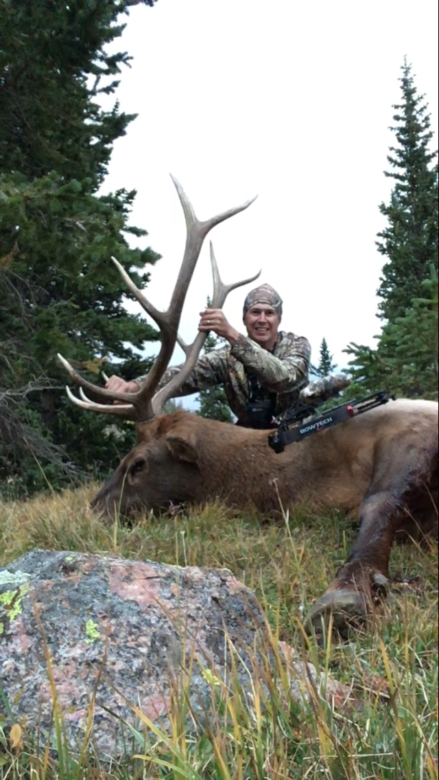
By Ryan Johnson, Bowtech Pro Staff

Chances are, if you’re a bowhunter, you fall in to one of two categories: an elk hunting junky or someone who’s always dreamed about elk hunting. If you find yourself in the first category, please let me know if you want to start a support group, we can drown our withdrawals in some over-priced coffee until fall hits. If, however, you identify more with the second group, this article is for you.

For many, elk hunting is a dream that stirs the soul but seems about as realistic as tossing a touchdown pass to Gronk, or playing 18 with Rory. That, I feel, is one of the biggest misconceptions for the have-yet-to elk hunter. You can elk hunt this year, I promise you, if you’re willing to do a bit of leg work right now.

The first and most important step is having realistic expectations. We all see magazine articles; oh excuse me, nowadays Facebook and Instagram posts, of giant bulls walking through lush green meadows with 23 cows and screaming their brains out. This is where the newbie gets led astray. These types of hunts can happen to any elk hunter, on any hunt, in any western state (and now a couple back east as well) but the reality is, most of these types of hunts either take a small fortune, a guide and an awesome chunk of private ground, OR many years of playing the tag draw game. However, if you just want to get out west and pursue the majestic wapiti, it can realistically be done for a grand or two each year. As archery hunters, we have the bonus of season dates falling where the opportunity to call in a satellite bull slinking through the dark timber to hair raising close distances is very much a reality for those willing to wear out a little boot leather.

So, here’s the skinny on hunting elk out west this fall, or as much as I can cram in just a few paragraphs. I will add that there is an endless amount of resources available to anyone tech savvy enough to find it. Honestly, it’s not that hard and I list a few of my favorites at the bottom.

Okay, we’ve decided that just getting out west and looking for an elk this fall is a must. But where do we go? Idaho? Colorado? Utah or New Mexico? The answer is yes! For those that don’t already know, every state in the West offers elk tags via a draw process. Each state’s process varies to some degree and some states offer over-the-counter or easy-to-draw tags. Most states award some sort of “point” for each year you apply but do not draw, except for Idaho and New Mexico. The number of accumulated points increases your odds of drawing a tag in that state. As a rule of thumb, the harder the tag is to draw the better the hunting will be. It’s best to approach the elk draws with a strategy and I would suggest this one; Identify a state or area that offers the over-the-counter tag or easy to draw type tag AND you have a connection to. A long-lost high school buddy, a cousin, that good friend that’s always said “come on out” but you’ve never taking him or her up on it.

Use this hunt to get your elk hunting feet wet. Find a way to stash a hundred bucks each month and make yourself just go hunt elk every year or every other year. Plan to work hard for the 10 days you’re there and look at it as building your elk hunting knowledge bank. If you happen to score, awesome! If you don’t, you’ll have the time of your life. Colorado and Montana offer good options for the over-the-counter guy or gal, and Wyoming has good hunting on their general elk tag which has to be drawn but has very good odds of drawing every other year or so. Use your connection to identify roads and access points, and maybe a place to grab a warm shower every few days or at least have an emergency contact close by.

At the same time, start building points in as many states as makes sense for your budget. Colorado and Wyoming offer decent hunts that can reasonably be expected to draw within a decade. New Mexico and Idaho both have true lottery systems with no points, meaning you have as good of chance of drawing in year one as you do in year 20. Utah, Arizona, and Nevada offer some of the best elk hunts in the west in states with a point system but be prepared to wait 10-20 years for that coveted tag. Some states require you to front the entire tag fee and return most of it if you do not draw, while others do not require you to front fees, but will likely get you with a larger application fee and/or even a small game license.

What this plan will accomplish is allowing you to gain some elk hunting mojo by getting out and hunting. Even the best elk tags still require work; elk don’t just stand on the side of the road. They like deep dark hidey holes and trust their nose with their lives, literally. Spend some time learning a area that you can hunt regularly to find some of those hidey holes and learn how elk behave. Then, when the magic hits and you score that dream tag, you have the tools you’ve been able to put in your tool box that will allow you to make the most of your “dream hunt.”

Here’s a few tips to help you along the way:

  • Use OnX maps to help find units with good amounts of public land to hunt. There’s nothing worse than finding out your unit is riddled with private property after you’ve picked up your tag; (No I’m not sponsored, there’s just not anything else that even comes close on the market right now when it comes to public/private land sorting apart from amassing a library of paper maps).
  • Most state game agencies will publish draw odds on their websites along with harvest statistics allowing you to find areas in which you can realistically draw tags and have a decent chance of at least finding elk. Keep in mind anything north of 15-20% harvest success is darn good.
  • The states that offer a point system use one of two types: Preference Points or Bonus Points. A Preference Point System is a true winner take all system. Those with the most points get the tags for that unit or hunt code. This gives a hunter the ability to somewhat predict when they will draw a tag. Bonus Point systems usually have a split, where a portion of the tags are given to the top point holders and a portion is drawn randomly amongst all applicants, giving all who apply at least a chance of drawing, all though the odds are often very low.
  • Apply for tags online. Often the online process will not allow you to make a mistake. If applying on paper and you miss enter a hunt code or forget to add a $5 conservation fee or whatever the case, your application will be rejected.
  • Hunt as often as you can!! Every single year people draw tags they’ve been waiting multiple decades for only to learn they know nothing about elk hunting and waste their tag.
  • Don’t overlook late season rifle hunts. It can be cold, many of them are just cow hunts, but it can certainly open the door to elk hunting in a successful way.
  • If you’re after a bull hunt, plan your vacation days for as late in September as you can. As a rule of thumb, September 15 – early October will be prime rut dates.
  • Application periods are early! End of January through May for most states. Even though it’s snowy and cold outside, you need to start planning your elk hunt now!

This in no way is a complete list, not by a long shot. But I hope it at least encourages you to start thinking about making your dream a reality. Use the resources below to expand your knowledge and good luck!

By Jon E. Silks

Gear Testing Editor – Petersen’s Bowhunting Magazine


The expert reviews keep rolling in!

“Shooting the SR6 was a pleasure – they could have named it the SR6 SS.”

“Shooting the Realm SS in the smooth setting will have you questioning the draw-weight setting. It is extremely easy to draw front to back in this setting and feels as if the bow is set to a lower weight.”

– Jon E. Silks, Petersen’s Bowhunting

Read Jon’s full Realm SS and Realm SR6 review at:

2019 Bowtech Launch: Realm SR6 & SS Review

    0
    YOUR CART
    Your cart is emptyReturn to Shop
      Calculate Shipping
      Apply Coupon